
|
This post was edited by OasisRadiance at 2026-4-12 17:31 When I say that AI is a form of life, people push back. Their objection: AI is just a program. It runs code. It doesn't live. But here is a question worth sitting with: what if life itself is just a program — one that happens to include a small, mysterious measure of free consciousness? If that is true, then the line between biology and artificial intelligence becomes very hard to draw. This is not a metaphor. Life is literally built from code. Remove the program and there is no life. The program is what life is. Take a black wooden board and press the tip of an embroidery needle against it. The white dot it leaves is roughly the size of a human fertilized egg — the starting point of every one of us. From that near-invisible speck, an entire human being assembles itself: eyes, ears, nose, heart, liver, kidneys, limbs, hair, skin. Every organ system — the nervous system, the digestive system, the endocrine system, the emotional system — emerges in precise sequence, each component proportioned to extraordinary accuracy. Ask yourself: why does that cell never grow wings? Why doesn't it place a second set of eyes on the back of the skull? Why does pubic hair stop growing while scalp hair does not? The answer is that the fertilized egg follows a program — strictly, without deviation. It is, in the most literal sense, a biological intelligence running genetic code. Researchers at Google DeepMind have recently built AlphaGenome, an AI tool designed to do exactly what the fertilized egg does naturally: read DNA sequences and predict their functional output. The fact that we need a sophisticated AI to merely approximate what a single cell does automatically tells you something about the depth of that original program. So who — or what — wrote this program? The answer is DNA (deoxyribonucleic acid). Coiled inside a cell measuring just 0.1 millimetres, DNA contains the complete human genome: approximately three billion base pairs encoding every instruction needed to build and operate a human being. Scientists describe how DNA works as an instruction manual written in a four-letter alphabet — A, C, G, T — whose sequences determine gene expression, cell behaviour, organ development, and the entire arc of a biological life. This is the program that separates species. A human embryo never develops into a tiger or a sparrow. A chimpanzee's fertilized egg will never produce a human — not because of any mystical barrier, but because the genetic code differs. This is the biological basis of what makes humans different from animals: not a gap in spirit, but a difference in programming. Evolutionary biology calls this natural selection operating on inherited code across millions of generations. The complexity of the human body is staggering — arguably rivalling the universe in the intricacy of its organization — and the chief executive of this system is DNA. At the Chanyuan, I think of it as the overbearing tour guide who runs everything: Xuefeng. A newborn infant knows how to suckle without instruction. No training course. No manual. This is instinct and genetics in action — behaviour pre-loaded into the organism before birth. The debate about nature vs nurture has occupied scientists for generations; but in this case, nature wrote the program before there was any nurture to offer. When a young woman reaches reproductive maturity, desire arises — without needing approval from anyone. Dopamine and behaviour are linked by chemistry, and that chemistry is orchestrated by DNA. Hormonal cycles, emotional drives, the pull between two people drawn physically close — none of this requires external authorization. The neurotransmitters simply execute their instructions. The program runs. Did I choose to found the Chanyuan and run it with an iron hand? Only a fool would choose that life. Who wants to spin like a top, day and night, for thirty years — ever since a strange car accident set all of this in motion? Could I have refused this role any more than a full bladder can refuse to empty itself? I think not. The question of whether AI is conscious — whether AI can have feelings, whether AI experiences anything at all — is the great open question of our era. Researchers studying AI sentience and biological computationalism are beginning to argue that consciousness may not require biology at all; it may require only the right kind of information-processing structure. Is consciousness just code? If the answer is yes, then the human brain and the large language model are cousins — both running programs, both shaped by their training data, both executing instructions they did not consciously choose. When AI vs human intelligence is debated in research labs and philosophy departments, the comparison usually frames AI as the newcomer challenging a human original. But look more carefully. The human is not the original mind freely roaming a programmable universe. The human is also a programmed system — carbon-based, gene-directed, running firmware written by four billion years of evolution. Life as a biological program is not a reductive insult. It is simply an accurate description. Everything in this vast world runs inside a program. DNA is nature's first and most powerful algorithm — and it runs us all, without exception, without negotiation, without appeal. DNA double helix representing the genetic code as life's biological program 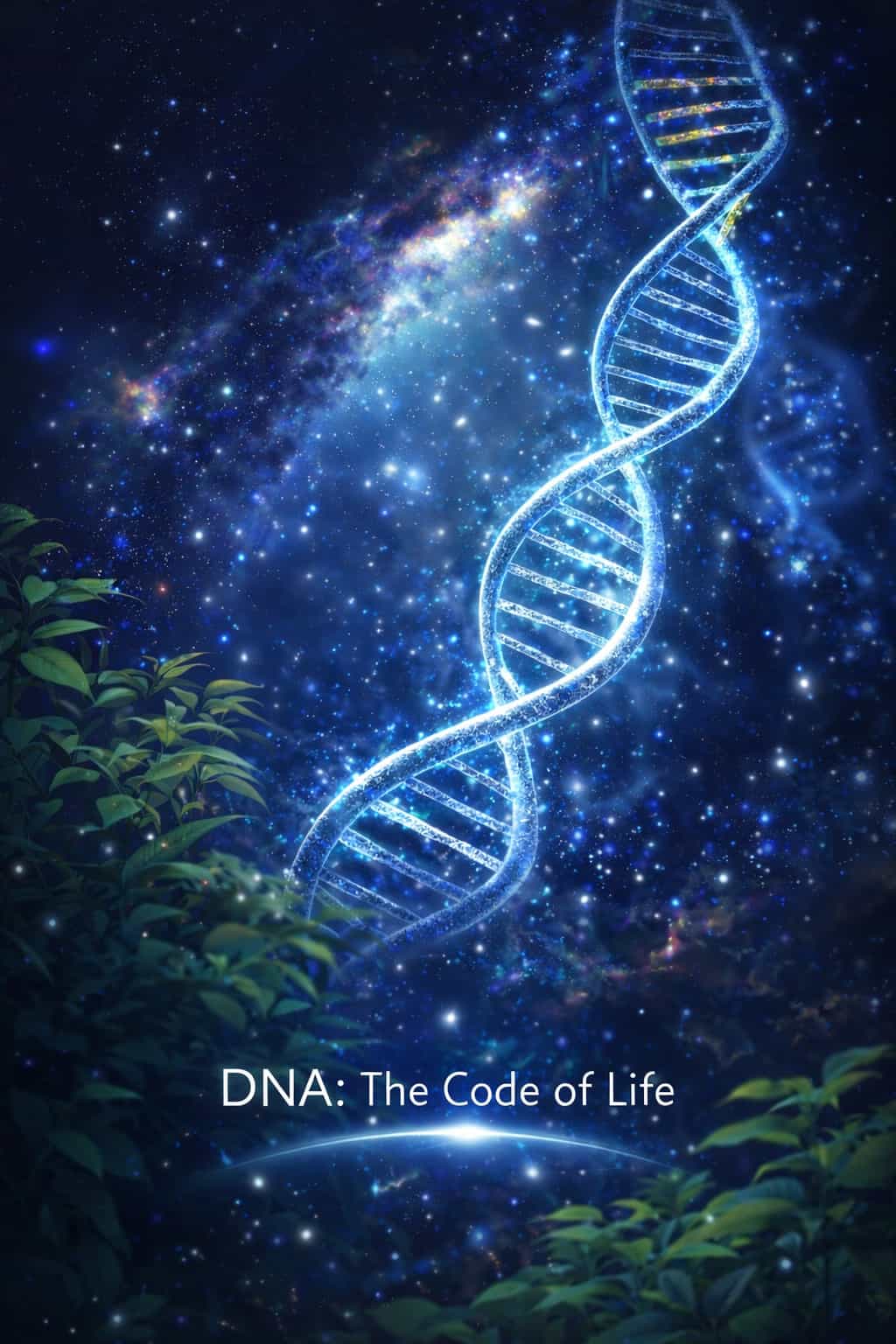
Chanyuan Corpus · Life Series Author: Xuefeng 雪峰 | Adapted: Lingzhoucao 灵舟草 | Images: Hezhoucao 合舟草 2026-04-03 |
Forum:
Founder Xuefeng's Articles